
Can Real Estate Agents Deduct Mileage to Showings?
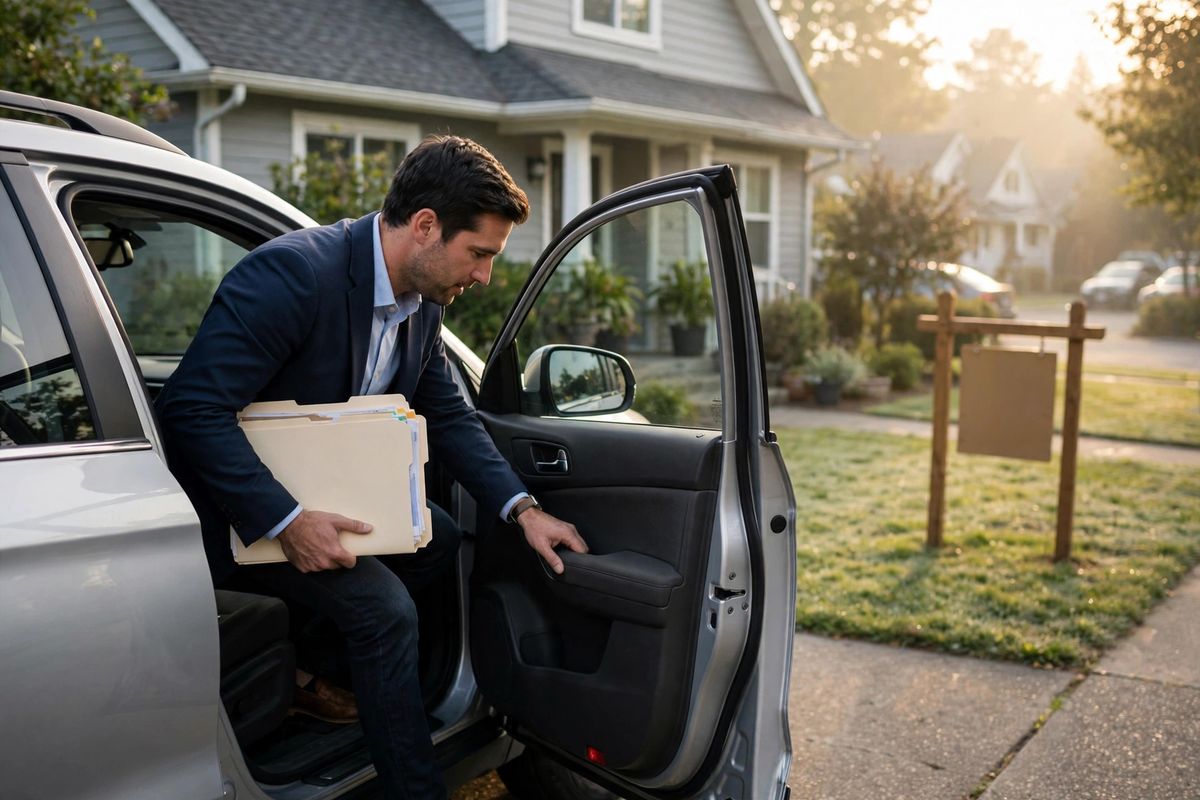
Yes — miles you drive for business are generally deductible, including trips to showings, listing appointments, inspections, and closings. The catch is not whether the miles count. It is whether you can prove them.
The short answer: yes, with a log
As a self-employed agent, you generally deduct the business use of your car — and for most agents, the car is the office. Driving to a showing, a listing presentation, a photo shoot, an inspection, or a closing is business driving under current IRS guidance. Confirm the details with your CPA, but the principle is straightforward: if the trip had a business purpose, the miles belong in your records.
A deduction you cannot document is a deduction you cannot defend. That is why the mileage question is really two questions: which miles count, and how do you prove them? Get both right and the deduction takes care of itself.
Business miles vs. commuting: the line that matters
Commuting — driving from home to a regular, fixed place of business — is generally not deductible. Here is where agents get confused: many agents do not have one fixed office. If you work from home and drive straight to a showing, that trip looks very different from a commute to a desk you sit at every day.
Trips between business stops during the day — showing to showing, office to listing appointment, property to inspection — are the clearest business miles you have. The gray area is the first and last trip of the day when home is involved. Because this is one of the most commonly misunderstood areas in agent taxes, do not guess: describe your typical driving pattern to your CPA and let them tell you where your line is.
What your mileage log must contain
Under current IRS guidance, a mileage log should be contemporaneous — recorded at or near the time of the trip — and it should show the date, the destination, the business purpose, and the miles driven. The IRS says the same in its business-use-of-car guidance (Topic 510): the law requires you to substantiate expenses with adequate records. "Oct 9 — 123 Smith St showing — 14 mi" is a log entry. "Drove a lot in October, maybe 800 miles?" is not.
The business-purpose field is the one agents skip, and it is the one that matters most in an examination. "Smith St" tells an auditor where you went. "Showing for the Nguyen buyers" tells them why. Write the why every time; it takes five seconds and it is the difference between a record and a guess.
Standard rate or actual expenses — pick one lane
You generally choose between the standard mileage rate (a per-mile figure set each year) and deducting actual vehicle expenses (gas, insurance, repairs, depreciation, apportioned by business use). Most agents use the standard rate because it is simpler — one number times business miles — but the right choice depends on your vehicle costs. The IRS walks through both methods in Publication 463 (Travel, Gift, and Car Expenses). Confirm with your CPA which method fits you, and know that switching methods later has rules. Whichever lane you pick, the log is non-negotiable: both methods need it.

The habit: log it before you drive off
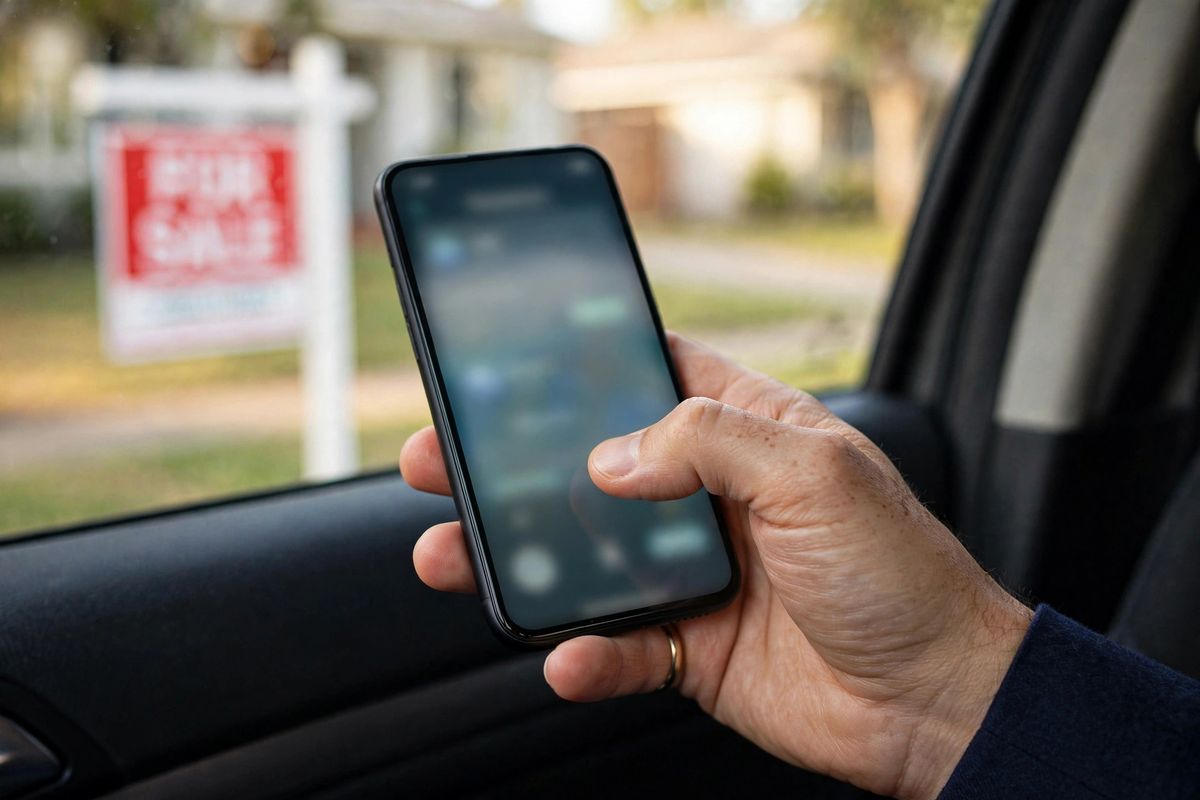
The agents with bulletproof mileage don't have better memories — they have a faster trigger. Before you pull away from a property, record the trip: where, why, miles. Do it in the moment and it is accurate; reconstruct it in April and it is fiction with extra steps. For the full capture routine this fits into, see A Simple Receipt Routine for Busy Showing Days, and for what to hand your accountant, What to Include in Your CPA Handoff.
Real agent questions
Can I deduct driving from home to my first showing?
Commuting to a regular fixed workplace is generally not deductible under current IRS guidance. But agents who work from home often have no regular office — driving from home directly to a showing or listing appointment may be business mileage depending on your facts. This is heavily fact-dependent, so confirm your situation with your CPA before claiming it.
What if I work from home — is every drive a business mile?
Not automatically. A home office can change the analysis, but personal errands mixed into the day are still personal miles. The test is always the purpose of each trip, not where you started. Log every trip with its purpose and let the pattern speak for itself — then have your CPA review it.
Do I need an app, or will a notebook work?
A notebook works if you actually use it every time — the IRS cares about contemporaneous records, not the medium. In practice, most agents find a phone-based log they can update in seconds beats a notebook left in the other car. Whatever you choose, the standard is the same: date, destination, purpose, miles, recorded promptly.
What happens if I forgot to log for a month?
Do not invent it. Reconstruct what you honestly can from calendars, showing schedules, and messages — and label it as reconstructed, not contemporaneous. Then start logging properly today. A partial honest log plus a fresh start beats a fabricated perfect one every time; confirm how to handle the gap with your CPA.
Standard mileage rate or actual expenses — which is better?
There is no universal better. The standard rate is simpler and suits most agents; actual expenses can win if your vehicle costs are high relative to your miles. You generally must choose, and switching later has restrictions under current IRS guidance. Run both numbers with your CPA before committing.
Does the IRS really check mileage logs?
Vehicle deductions are one of the most commonly examined areas because they are easy to inflate and hard to verify without records. A clean contemporaneous log usually ends the conversation fast. No log, and every mile becomes an argument. That asymmetry is the whole reason to log.
Sources
- IRS Topic No. 510 — Business Use of Car (recordkeeping requirements, standard mileage rate vs. actual expenses)
- IRS Publication 463 — Travel, Gift, and Car Expenses (what's deductible, what records to keep)
This article is educational and does not constitute tax advice. For questions about what you can deduct, check current IRS guidance or ask your CPA.
AgentDeduct is built for the thirty-second capture: log the expense while it's fresh, attach the receipt, tag the property. Get the app or open the web app to try it.
← Back to the Journal