
Do Real Estate Agents Need to Keep Gas Receipts?

Short answer: only if you deduct your vehicle costs under the actual-expense method. If you use the standard mileage rate — as most agents do — gas receipts are irrelevant, and your mileage log does all the work instead. The real question isn't whether to keep the receipt. It's which method you're on.
The two methods, in plain English
Under current IRS guidance, business vehicle costs can be figured two ways — the IRS lays out both in its business-use-of-car guidance (Topic 510). The standard mileage rate is a per-mile amount set annually by the IRS: you multiply it by your business miles, and that's your vehicle deduction. Gas, oil, repairs, insurance — all of it is baked into the rate, so none of those receipts matter. The actual-expense method adds up what you really spent — gas, oil, repairs, tires, insurance, registration, depreciation — and multiplies the total by your business-use percentage. Bigger paperwork, potentially bigger deduction.
A mileage log is the record of business miles driven: date, destination, business purpose, and miles per trip. You need it under the standard rate (it's the entire basis of the deduction) and you need it under actual expenses too (to compute the business-use percentage).
So do you need the gas receipts?
Under the standard mileage rate: no. The rate already accounts for fuel, so a shoebox of gas receipts adds nothing to your return — though keeping them a few months as backup never hurts. Under the actual-expense method: absolutely yes. Gas is typically the largest single vehicle cost, and without receipts you can't substantiate the total you're multiplying by your business percentage.
This is where agents go wrong in both directions. Some keep every gas receipt for years while claiming the standard rate — pure clutter. Others claim actual expenses with no receipts — pure risk. Match the paperwork to the method.
How to choose between them
There's no universal right answer, but there are patterns. Agents who drive a lot of business miles in an economical car often do better with the standard rate — it's simple and the rate is generous relative to their costs. Agents with expensive vehicles, high insurance, or major repairs in a given year sometimes do better with actual expenses. The honest way to choose is to run both numbers with your CPA and compare.
One caution: the choice has a memory. There are restrictions on switching methods once a vehicle is in business service — particularly around the first year — so this isn't a decision to revisit casually each April. The IRS details the switching rules in Publication 463 (Travel, Gift, and Car Expenses). Confirm your options with your CPA before the car goes into business use, or as early as you can.
What gas receipts actually prove
Under the actual-expense method, a gas receipt proves three things: the date, the amount, and that fuel was purchased. What it doesn't prove is the business context — that the fuel powered business miles. That's the mileage log's job, plus your business-use percentage tying the two together. Receipt + log + percentage: that's the complete chain. Any one of the three alone is incomplete.
The trap: receipts without a method
The most common mistake isn't choosing wrong — it's never choosing at all. The agent who stuffs gas receipts in the visor "for taxes" but has no mileage log and no idea which method they're using has the worst of both worlds: clutter without substantiation. If that stings, the fix is a single conversation with your CPA: pick a method, then keep exactly the records that method requires. For help building the mileage side, see What Does the IRS Require in a Mileage Log?

What to do instead of hoarding receipts
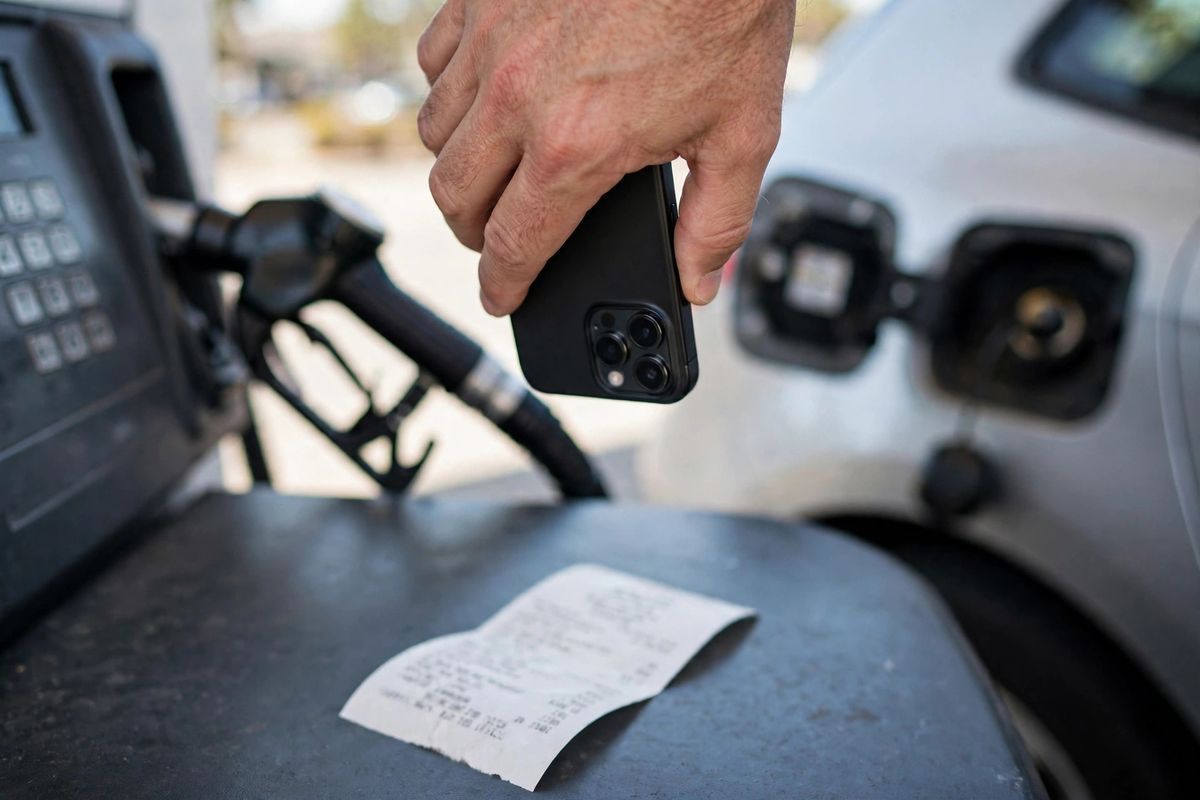
If you're on the standard rate, stop collecting gas receipts and start protecting your mileage log — that's the document that matters. Photograph the occasional receipt if it makes you feel better, but put your energy into logging every business trip fresh. If you're on actual expenses, photograph every fuel receipt at the pump (thirty seconds, before it fades in the sun) and keep them with the rest of your vehicle costs. Either way, the habit is the same: capture in the moment. AgentDeduct logs the miles and holds the receipts in one place, whichever method you chose.
Real agent questions
What is the standard mileage rate?
It's a per-mile rate set annually by the IRS that you multiply by your business miles to compute the vehicle deduction. The rate changes from year to year, so confirm the current figure for the tax year in question — don't rely on last year's number. Your CPA will know it.
Can I switch between the standard rate and actual expenses year to year?
There are restrictions on switching methods, particularly around the first year a vehicle is placed in service — using one method can lock you out of the other later. Because the choice has multi-year consequences, confirm your options with your CPA before you commit, ideally before the car goes into business use.
Under actual expenses, do I need receipts for repairs and insurance too?
Yes — under the actual-expense method, everything counts: gas, oil, repairs, tires, insurance, registration, and depreciation, each multiplied by your business-use percentage. That's the tradeoff: a potentially bigger deduction in exchange for documenting every cost. Under the standard rate, none of those receipts matter.
What if I drive one car for both business and personal use?
That's the norm for agents, and both methods handle it. Under actual expenses, you multiply total vehicle costs by your business-use percentage. Under the standard rate, you simply multiply business miles by the rate — personal miles never enter the picture. Either way, the mileage log separating business from personal is what makes it work.
Does a gas station receipt show enough detail?
For documentary purposes, yes: it shows the date, the station, and the amount paid. What's missing is the business context — which is why the receipt alone isn't enough. Pair it with your mileage log and a business-use percentage, and the three together tell the complete story.
What about electric vehicle charging costs?
The same logic applies: under the actual-expense method, charging costs are part of your documented vehicle expenses; under the standard mileage rate, they're covered by the rate and you don't track them separately. Home charging makes the business-use split trickier, so confirm the approach with your CPA.
Sources
- IRS Topic No. 510 — Business Use of Car (the two methods: standard mileage rate vs. actual expenses, switching restrictions)
- IRS Publication 463 — Travel, Gift, and Car Expenses (car expense rules, recordkeeping, depreciation limits)
This article is educational and does not constitute tax advice. For questions about which vehicle method fits your situation, check current IRS guidance or ask your CPA.
Whichever method you chose, the mileage log is non-negotiable. Get the app and log every business drive the moment it ends.
← Back to the Journal